

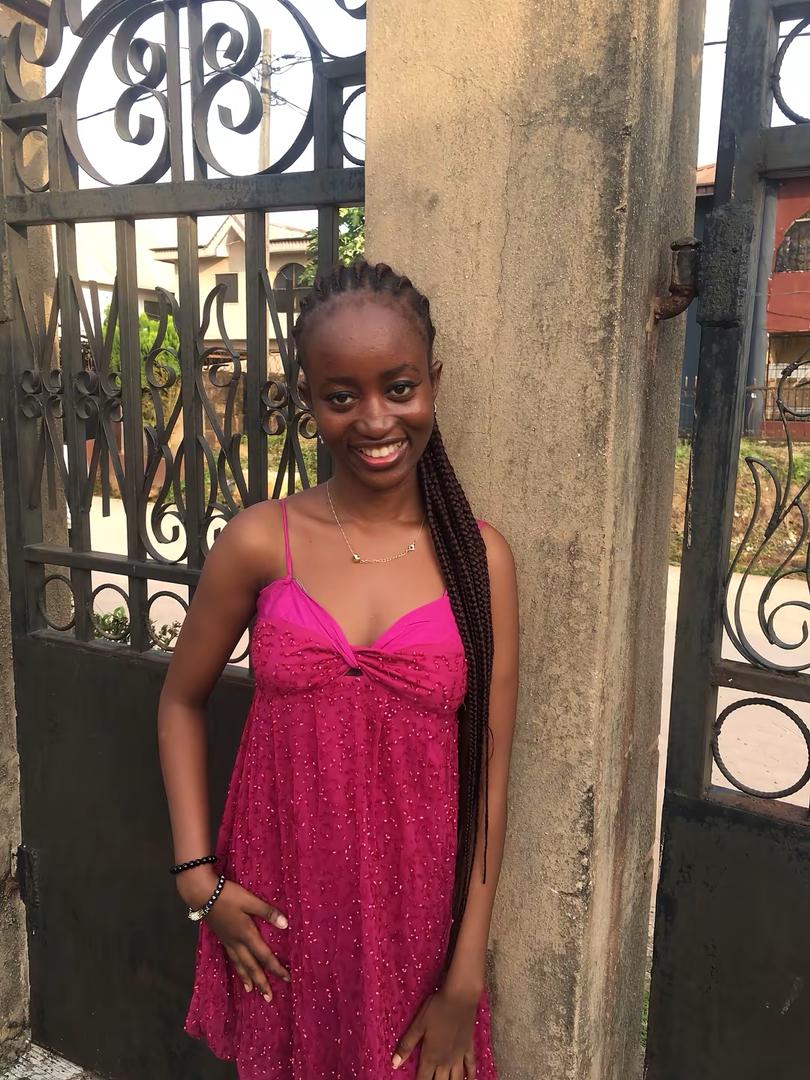
Living with Scoliosis has been a journey of ups and downs, challenges and triumphs. As I reflect on my path, I am reminded of the resilience and determination that have carried me through. My name is Aihie Princess Osariemen, and I am from Nigeria. I am 20 years old, and I was diagnosed with scoliosis when I was 12.
The purpose of writing this article is to raise awareness about scoliosis, share personal strategies for managing its challenges, and empower individuals with scoliosis to take control of their journey. This word may seem strange to many of you: “scoliosis.” Scoliosis is a lateral abnormal curvature of the spine, which makes the spine curve sideways. It can be shaped like a C or S and mostly occurs in adolescents. The curvature increases over time, and the higher the curve, the more serious it becomes.
Living with scoliosis is very challenging, and you have to navigate physical, emotional, and social difficulties. Imagine some of your classmates in secondary school gossiping about your twin sister, how she is bent, and the way she walks, all in your presence. My twin sister’s case was more pronounced than mine. We had to adjust to wearing loose clothing, which was difficult because we were used to tight, body-fitted clothing. I had to build my self-confidence because my twin and I became depressed; it was not easy.
I started experiencing physical challenges like back pain and knee pain because I couldn’t work for long periods. These challenges are not for the weak. Despite that, I had to boost my courage by wearing loose clothing, taking selfies, and accepting my body the way it was. It wasn’t an easy journey. I started ignoring hurtful words and decided not to let them affect me. My doctor also recommended back braces to correct my posture.
I had a great support system; my mom and physiotherapist encouraged me with words that boosted my self-esteem, making me and my twin sister feel special. My friends also told me they didn’t see any defect in me. There were many great turning points that made an impact.
One significant point is that I learned to love and accept my body, going out in public and talking about scoliosis, and advising others to love themselves, even with their disabilities. It shaped my perspective in a way that I no longer listened to what anyone said about my body; I appreciated my body. It made me think that every disability was created for my ability.
In this journey of scoliosis, my key takeaway is that listening to people’s bad advice can lead you astray. In conclusion, I would say that every challenge brings a chance for change, and the change starts with you. A message to my readers is to not ignore your potentials and accept yourself, flaws and all. Early detection of scoliosis is also crucial.
My journey with scoliosis has taught me a lot.
