

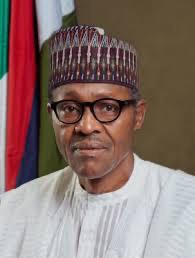
Enduring legacy of Buhari: A leader of Contrasts
By Aihie Princess
Muhammudu Buhari’s legacy is a complex tapestry of contradictions-a military leader turned democratic president, a champion of stability and security, yet a figure of controversy and division. As Nigeria continues to navigate its path forward, one thing is clear: Buhari impact on the nation’s history will be felt for generations to come .
Muhammadu Buhari was born on December 17, 1942 in Daura, Katsina State, Nigeria to a Fulani family. His Father, Mallam Hardo Adamu, was a Fulani chieftain, and his mother Zulaihat. He was the 23rd child of his father and was single handedly raised up by his mother after his father’s death.
Buhari attended primary schools in Daura and Mai’adua from 1948 to 1952 and then he proceeded to Katsina Middle School in I953 and later attended Katsina Provincial Secondary School (Now Government College, Katsina) from 1956 to 1961, where he earned his West African School Certificate.
Primarily, Buhari aspired to Study Medicine but he was advised to join the military due to the lengthy path to become a pharmacist. His interest in the military was also influenced by his cousin, Mamman Daura, and Junior Officer Hassan Katsina.
In 1961, Buhari joined the Nigeria Military Training College in Kaduna. He under went officer cadet training at Mons Officer Cadet School in Aldershot, England, and was commissioned as a Second Lieutenant in January 1963.
Muhammadu Buhari military career and presidency were marked by several notable operations and conflicts. In 1967-1970 during the Nigerian Civil War, Buhari fought on the federal side, serving as a sector commander and participating in operations to bring Biafran forces under control. He was involved in key battles, including the battle of Opi and the Battle of Abakaliki.
In 1983, during the Chadian Military Affair, Buhari led cross-border operations against Chadian forces, defying orders to withdraw and earning praise for defending Nigeria sovereignty.
Also as Head of State, Buhari launched WAI to promote civil responsibility, combat corruption and enforce strict discipline. He also prioritized defeating territories and securing the release of Chibok girls.
Some notable event that happened during Buhari regime was the failed kidnapping attempt of former Minister Umaru Dikko in London. Also in 1987, Buhari government was criticized for clearing 53 uninspected suitcases allegedly filled with cash for the Emir of Gwandu. Buhari was overthrown in a bloodless coup in 1984 led by General Ibrahim Babaginda citing his inability to manage the economy and widespread discontent over his harsh policies.
Buhari military experience significantly shaped his leadership style in the aspect of Discipline and order like Buhari’s military training and experience taught him the importance of structure and discipline, Buhari also influenced his decision-making style often relying on a centralized system where key decision were made at the highest levels of government. Buhari leadership style is often described as austere and no- nonsense.
Overall Buhari leadership style played a significant role in shaping his leadership style, decision-making style and approach to governance. Buhari’s presidency lasted from May 29, 2015 to May 29, 2023.
Some of the key decision he took;
In the area of curbing corruption, Buhari launched a high-profile anti corruption drive, establishing the Whistleblower Policy and supporting the Economic and Financial Crimes Commission (EFCC) . This led to the prosecution of many high -profile individuals and the recovery of stolen funds.
Buhari also prioritized combating Boko Haram insurgency, also restructuring the military leadership and moving the military command center to Madiguri.
Buhari tenure also focused on diversifying the economy, promoting agriculture and infrastructure development. His government introduced programs like N-power, TraderMoni and school feeding initiatives.
They were also a lot of challenges faced during Buhari tenure and some of the challenges faced were insecurity. Despite all effort to defeat Boko Haram, banditry, herdsmen-farmers clashes and kidnapping persisted. Nigeria also experienced two recession during his tenure largely due to fall of oil-prices and COVID-19 pandemics. Buhari administration also faced criticism from limiting press freedoms, curbing civil liberties, and handling protest like the #ENDSARS movement. The currency redesign policy triggered economic hardship and cash crisis and the ban of twitter harmed Nigeria digital economy and was seen as an hindrance to freedom of speech.
Buhari had impact of his decision like his tenure invested in roads, rail lines, power projects, improving Nigeria’s infrastructure. Initiatives like N-power and school feeding programs aimed to alleviate poverty and support the vulnerable.
Buhari administration left a long-lasting legacy in infrastructure development with projects like the Lagos-Ibadan Expressway and Abuja-Kaduna Rail-line. However his economic policies were criticized for worsening inequality, inflation and a high rate of unemployment. Buhari presidency was marked by hope and disappointment, it was indeed a melancholy with his policies having a hard impact on Nigeria development.
The Public described Buhari leadership as autocratic and synonymous to the past leaders. Speaking in an interview with Veritas Newspaper, Mr Agho Eseosa said “In my assessment, his leadership style was autocratic. Under this case of banning Twitter for example. The killing of END SARS protesters too. He was not answerable to the plight of the masses, but on a general note, I feel Nigeria is largely govern by a certain cabal. Our so -called president have just been figurehead especially after the time of President Obasanjo.”
Judging from voices of the masses, it is safe to say that he was not a leader of example and was not answerable to his people and was not open to opposition and his government was autocratic, his policies were contrast to Nigeria Development. On his post on Facebook handle, Ibrahim Haruna said “Buhari has left a lasting mark in Nigeria Politics ” but to me I would say “he has left a lasting scar”.
